Solid-state batteries have been the automotive world’s most tantalizing promise for the better part of a decade. The pitch: double the energy density, faster charging, improved safety, and longer lifespan compared to conventional lithium-ion cells. For years, that promise remained locked behind laboratory doors, hindered by manufacturing processes that simply could not scale. Producing solid electrolytes at commercial volumes was slow, expensive, and riddled with defects. Every year brought another “breakthrough” announcement, followed by another quiet delay.
Then came 2026.
This year marks a genuine inflection point. Pilot production lines are running. Automakers have committed to specific vehicle launch dates. Battery manufacturers are signing supply agreements. The conversation has shifted from “if” to “when,” and the answer to that question is rapidly becoming “now.”
The difference is not a single dramatic discovery. It is the convergence of multiple manufacturing innovations that have collectively solved the puzzle of taking solid-state cells from lab to fab. Understanding these breakthroughs requires looking at how the industry cracked the code on production at scale.
For a quick overview of how solid-state technology compares to conventional lithium-ion, see the table below.
| Metric | Conventional Lithium-Ion | Solid-State (Current/Projected) |
|---|---|---|
| Energy density | 250 to 300 Wh/kg | Potentially significantly higher; commercial products not yet at scale |
| Cost per kWh | Around $90 to $110 (industry estimates) | Higher than lithium-ion, though the gap is narrowing |
| Cycle life | 2,000 to 3,000 cycles (mature technology) | Lower than mature lithium-ion; remains a challenge |
| Charging time (10 to 80%) | 20 to 40 minutes (typical) | Under 15 minutes demonstrated in some prototypes |
| Safety | Flammable liquid electrolyte; thermal runaway risk | Inherently non-flammable solid electrolyte |
From Lab to Fab: Key Manufacturing Innovations
The fundamental challenge of solid-state battery manufacturing has always been the interface between solid materials. Unlike liquid electrolytes that naturally conform to electrode surfaces, solid electrolytes require precise, uniform contact across every layer. In the lab, researchers could achieve this with tiny cells and careful hand assembly. At commercial scale, that approach was impossible.
Three manufacturing innovations have changed the equation.
Dry electrode processing has emerged as perhaps the most significant breakthrough. Traditional lithium-ion manufacturing uses solvent-based slurries that must be dried in massive ovens, a process that consumes enormous energy and limits production speed. Dry processing eliminates solvents entirely, pressing electrode materials directly onto current collectors. For solid-state cells, this is transformative because it allows precise control over the electrode-electrolyte interface without the complications of solvent interaction with sensitive solid electrolyte materials.
Roll-to-roll manufacturing has also matured significantly. Early solid-state production relied on batch processes that could not match the throughput of conventional battery lines. New roll-to-roll systems developed by equipment manufacturers now handle the delicate stacking of solid electrolyte layers at speeds approaching conventional lithium-ion production. Toyota and its partner Panasonic have invested heavily in adapting these systems for their solid-state pilot lines.
Automated assembly and inspection rounds out the trifecta. Solid-state cells are far more sensitive to contamination and defects than their liquid-filled counterparts. A single microscopic void in the electrolyte layer can cause failure. Advanced machine vision systems and robotic handling now achieve the precision required, with defect detection rates that make commercial-scale quality control feasible.
The result is that production yields have improved significantly from early pilot runs, though exact figures vary by manufacturer and chemistry. That improvement matters enormously for cost.
The Materials Revolution: Solid Electrolytes Go Mainstream
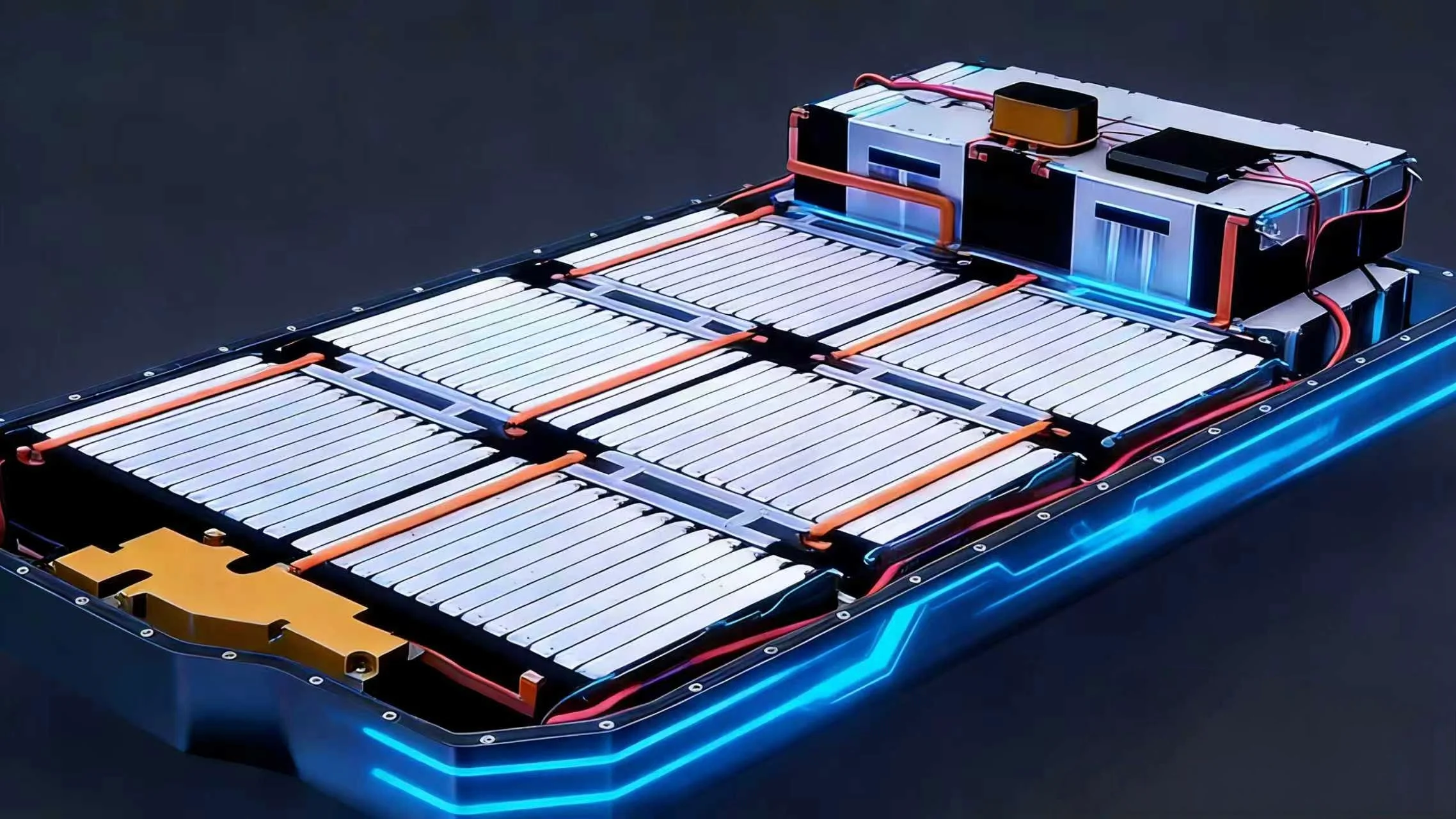
Manufacturing breakthroughs mean little without the right materials. The solid electrolyte is the heart of any solid-state cell, and the chemistry chosen determines everything from performance to production cost.
Three families of solid electrolytes have dominated research: sulfides, oxides, and polymers. Each has distinct advantages and challenges, and many industry observers point to sulfide-based chemistries as a leading candidate for automotive applications.
Sulfide electrolytes offer the highest ionic conductivity, approaching that of liquid electrolytes. They are also relatively soft, which helps them conform to electrode surfaces under pressure. The challenge has always been their sensitivity to moisture, requiring strict dry-room manufacturing conditions. Companies like Solid Power and Toyota have invested heavily in sulfide chemistry, and their recent milestones reflect growing confidence in this approach.
Oxide electrolytes provide excellent stability and safety but typically require high-temperature sintering, which complicates manufacturing and drives up costs. They remain relevant for certain applications, particularly where thermal stability is paramount, but have lost ground in the automotive race.
Polymer electrolytes offer the easiest manufacturing because they can be processed using techniques similar to conventional battery production. However, their ionic conductivity at room temperature has historically been too low for high-performance applications. Recent advances in polymer-ceramic composites have improved this significantly, and companies like Bolloré have continued to develop polymer-based systems for specific vehicle segments.
Many industry observers point to sulfide-based solid electrolytes as a leading chemistry candidate for premium electric vehicles, with oxide and polymer systems finding niches in stationary storage and lower-cost applications.
Solid-State Battery Cost vs. Lithium-Ion: Closing the Gap
Cost has always been the elephant in the room for solid-state batteries. Early estimates suggested they would cost two to three times as much as conventional lithium-ion cells. That gap is closing rapidly.
Industry estimates suggest solid-state cell costs remain higher than conventional lithium-ion, though the gap is narrowing as production scales. The trajectory, however, is steeply downward.
Manufacturing efficiencies account for a significant portion of the reduction. Dry electrode processing eliminates the energy-intensive drying step, cutting production costs by an estimated 15 to 20 percent. Roll-to-roll manufacturing reduces labor costs and increases throughput. Automated inspection reduces waste from defective cells.
Material innovations also contribute. Sulfide electrolyte production has scaled significantly, with new synthesis methods reducing costs by more than half compared to 2023 levels. The elimination of expensive separators, which are unnecessary in solid-state designs, provides another cost advantage.
Economies of scale will drive the final push toward parity. As production volumes increase from pilot-scale to full commercial production, some industry projections suggest solid-state cells could approach cost parity with conventional lithium-ion later this decade or early next decade. For premium vehicles, where performance advantages justify higher costs, solid-state adoption will happen sooner.
The Players: Who’s Leading the Solid-State Race
The solid-state landscape features a mix of established automakers, dedicated battery startups, and joint ventures that blur the lines between them.
Toyota has been the most vocal advocate for solid-state technology. Toyota has announced plans to begin pilot production of solid-state batteries, with vehicle launches targeted for the late 2020s. The company has stated that its solid-state batteries will offer over 900 kilometers of range and charging times under 10 minutes to 80 percent capacity.
QuantumScape, the California-based startup backed by Volkswagen, has been working toward commercial production of its solid-state battery technology. The company’s ceramic separator technology, which uses a proprietary solid electrolyte, has demonstrated impressive performance in testing, including over 1,000 charge cycles with minimal degradation. Volkswagen plans to integrate QuantumScape cells into premium vehicles under the Porsche and Audi brands.
Solid Power has taken a different approach, focusing on licensing its sulfide-based technology to established manufacturers. The company’s partnership with BMW and Ford has progressed to pilot production, with BMW targeting a 2027 launch for vehicles using Solid Power technology.
CATL, the world’s largest battery manufacturer, has also entered the solid-state race with a condensed matter battery that it describes as semi-solid-state. The company’s roadmap includes scaling production for automotive customers, leveraging its enormous manufacturing expertise to drive down costs.
Samsung SDI and LG Energy Solution have both announced pilot lines and partnerships with automakers, positioning themselves as key suppliers for the solid-state era.
The competitive landscape suggests that the first wave of solid-state vehicles will come from premium brands, where higher costs can be absorbed, before trickling down to mass-market models later in the decade.
Impact on EVs: Range, Charging, and Safety
The performance implications of solid-state batteries are substantial, and the industry is beginning to see these benefits move from specification sheets toward real-world vehicles.
Range sees the most dramatic improvement. Solid-state cells have the potential to achieve significantly higher energy densities than conventional lithium-ion cells, though commercial products have yet to reach these levels at scale. In practical terms, this means a vehicle that currently delivers 500 kilometers of range could exceed 800 kilometers with the same battery weight. This transformation in EV capability is already reshaping how manufacturers approach vehicle design and what consumers can expect from their next electric vehicle.
Charging speed also improves significantly. Solid electrolytes can withstand higher current densities without the risk of dendrite formation that plagues liquid electrolytes during fast charging. This enables charging times that approach conventional refueling, with some solid-state cells demonstrating 10 to 80 percent charge in under 15 minutes.
Safety represents perhaps the most underappreciated advantage. Liquid electrolytes are flammable, and thermal runaway remains a concern in conventional lithium-ion batteries. Solid electrolytes are inherently non-flammable, eliminating a primary cause of battery fires. This safety improvement could reduce the need for complex thermal management systems, further reducing weight and cost.
The first solid-state vehicles, expected later this decade, will demonstrate these advantages in real-world conditions, providing data that will inform the next generation of designs.
Challenges Ahead: Remaining Hurdles to Mass Adoption
Despite the progress, significant challenges remain before solid-state batteries achieve true mass adoption.
Cycle life continues to be a concern. While laboratory cells have demonstrated impressive longevity, real-world conditions involving temperature variations, varied charging patterns, and mechanical stress present tougher tests. Cycle life remains a challenge for solid-state cells, with current prototypes generally showing lower cycle life than mature conventional lithium-ion technology. Improving this metric is essential for mainstream acceptance.
Low-temperature performance remains problematic for many solid electrolyte chemistries. Ionic conductivity drops significantly in cold conditions, reducing both range and charging speed. Manufacturers are addressing this through heating systems and electrolyte formulations, but cold-weather performance remains a weakness compared to liquid electrolytes.
Recycling infrastructure for solid-state batteries is essentially nonexistent. The materials and construction differ enough from conventional batteries that existing recycling processes cannot simply be adapted. Building this infrastructure will require investment and regulatory support, and the industry has only begun to address the issue.
Manufacturing scale remains limited. Even the most advanced pilot lines produce a fraction of the volume needed for mass-market vehicles. Ramping to gigafactory-scale production will take years and billions in investment.
Frequently Asked Questions
Are solid-state batteries available yet?
Not in mass-market vehicles. Pilot production lines are running, and several automakers have announced vehicle launch targets for the late 2020s, but solid-state batteries are not yet available in showroom vehicles at scale.
What is the solid-state EV battery release date?
Most announced timelines point to the late 2020s. Toyota has targeted vehicle launches for the late 2020s, BMW is aiming for 2027, and Volkswagen plans to integrate QuantumScape cells into premium vehicles under the Porsche and Audi brands. Mass-market availability is expected to follow later.
Solid-state battery vs lithium-ion: which is better?
Solid-state batteries offer potential advantages in energy density, charging speed, and safety. However, conventional lithium-ion remains cheaper, has a more mature manufacturing base, and currently delivers better cycle life. Solid-state is expected to first appear in premium vehicles before reaching mass-market models.
How much will solid-state batteries cost?
Industry estimates suggest solid-state cell costs remain higher than conventional lithium-ion, though the gap is narrowing as production scales. Some industry projections suggest cost parity could be approached later this decade or early next decade.
The Road to 2030 and Beyond
2026 may be remembered as a pivotal year in the transition of solid-state batteries from laboratory to commercial production. Not perfect, not cheap, not ubiquitous, but real. The manufacturing breakthroughs that defined this year have transformed solid-state technology from a laboratory curiosity into a commercial proposition.
The next phase will be about scale and refinement. Costs will continue to fall as production volumes increase. Cycle life and cold-weather performance will improve through iterative design. Recycling infrastructure will develop as the first generation of solid-state vehicles reaches end of life.
By 2030, some industry projections suggest solid-state batteries could capture a significant share of the premium EV market and begin making inroads into mainstream vehicles. The technology will not replace conventional lithium-ion overnight, but it will increasingly define what consumers expect from an electric vehicle.
The decade of promise is giving way to the decade of production. For an industry that has waited years for solid-state batteries to deliver on their potential, the progress is real even if the finish line remains ahead.