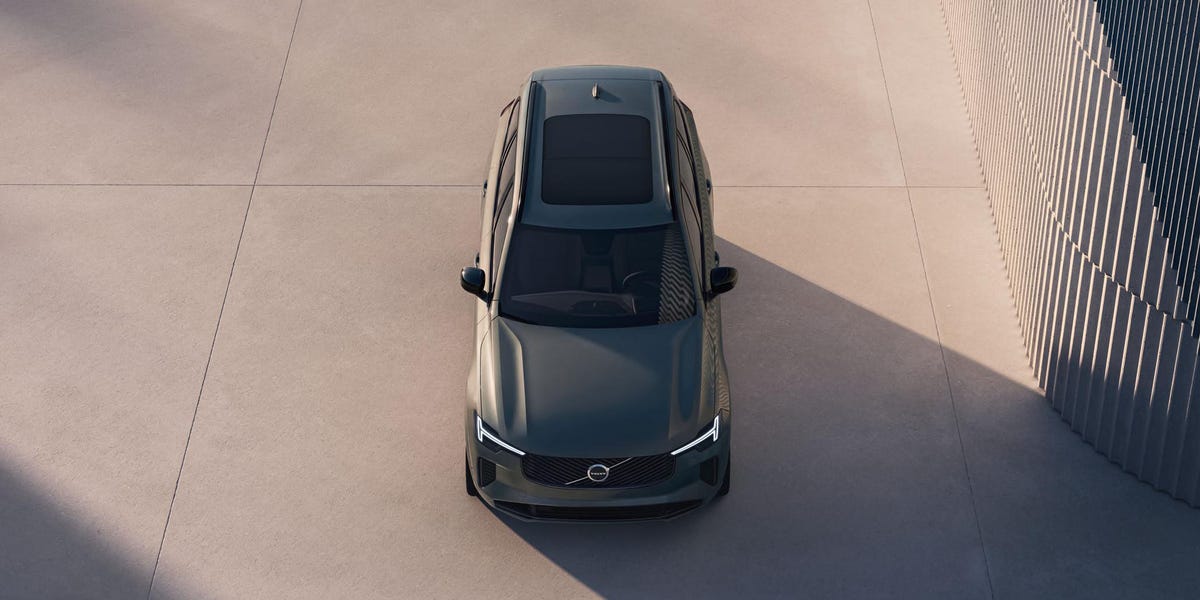
2028 Volvo XC90 Hybrid: Powertrain and Performance
The XC90 Hybrid carries Volvo’s T8 plug-in hybrid powertrain, which pairs a turbocharged 2.0-liter four-cylinder engine with a rear-axle-mounted electric motor. Combined output lands at 455 horsepower, routed through a standard eight-speed automatic transmission and standard all-wheel drive.
That output makes the XC90 Hybrid the most powerful model in the XC90 range. It is also the most fuel-efficient. Volvo has managed to make efficiency and performance complementary rather than competing priorities here, and the numbers back it up: Car and Driver testing recorded a 0 to 60 mph time of 4.8 seconds. For a three-row family SUV that weighs what the XC90 weighs, that is genuinely quick.
Towing capacity deserves its own mention. The XC90 Hybrid offers a maximum of 5,290 pounds, among the highest figures in the three-row plug-in hybrid segment. Buyers who need to pull a boat or a small travel trailer no longer have to choose between electrification and capability.
Battery and Electric Range
The centerpiece of the 2028 update is a new 37.9-kWh battery pack, a substantial increase that pushes claimed electric-only range to 73 miles per charge. That figure ranks among the best available from any plug-in hybrid on the market, and it changes the ownership equation considerably. Many commuters could handle a full week of driving without burning a drop of gasoline.
Charging, however, comes with a caveat. The XC90 Hybrid cannot DC fast charge. Owners will rely on home charging or Level 2 public stations. Volvo claims roughly four hours to go from 0 to 100 percent on a 240-volt, 16-amp outlet, which is reasonable for an overnight top-up but not ideal for road-trip charging stops.
Volvo does include drive modes that let drivers hold battery charge for later use or recharge the pack using the gasoline engine. That flexibility is useful on longer journeys where you want to save electric range for city driving at the far end of the trip.
Interior and Cargo Space
The XC90 Hybrid retains its three-row layout, seating up to seven. Buyers can choose between a six-seat configuration with captain’s chairs in the second row or a seven-seat setup with a three-across bench. The second row offers ample space even for taller passengers, and the materials throughout reflect the premium positioning Volvo has cultivated for years.
The third row is a different story. It works for children but becomes uncomfortable for adults on longer drives, which is a familiar limitation in this segment. Treat it as occasional-use seating rather than a true seven-passenger solution.
Cargo measurements from Car and Driver testing tell a practical story. Behind the third row, the XC90 Hybrid holds three carry-on suitcases. Fold the third row and that jumps to 15 carry-ons. Fold both rear rows and you get 30. That is a usable, flexible cargo hold for a family vehicle, though the third row’s presence does limit everyday trunk space.
Technology and Features
Volvo’s interior technology suite is comprehensive. An 11.2-inch touchscreen handles infotainment duties, paired with a 12.3-inch digital gauge cluster. A head-up display is available as an option.
The software runs on Google’s Android Automotive platform, which brings Google Maps navigation and Google Assistant voice control natively. Apple CarPlay is standard, so iPhone users are not left out. The system has matured considerably since Volvo first adopted it, and the Google integration remains one of the better native infotainment experiences in the industry.
Audio options start with a standard 600-watt, 14-speaker Harman/Kardon system. Buyers who want more can step up to an optional 1,410-watt, 19-speaker Bowers & Wilkins setup, which has long been regarded as one of the finest premium audio systems available in any vehicle.
A loaded roster of driver-assistance technology comes standard. The warranty coverage is merely average compared with some competitors, but Volvo’s complimentary scheduled maintenance program is excellent and offsets some of that gap.
Driving Impressions and Pricing
Behind the wheel, the XC90 Hybrid surprises. Steering is nicely weighted, and the SUV handles more nimbly than its size and weight would suggest. It does not feel like a sports car, but it feels more agile than most three-row competitors.
The standard suspension is the weak point. The ride feels too rigid for a luxury SUV, which undercuts the comfort story Volvo tells elsewhere. The optional air-spring suspension, available on the Ultra trim, is worth the extra cost for anyone prioritizing ride quality. It transforms the driving experience in a way that feels essential rather than indulgent.
Pricing starts at around $56,000. That positions the XC90 Hybrid competitively against other three-row plug-in hybrids, especially given its range advantage. Buyers cross-shopping full EVs should also note the related EX90 electric SUV, which shares Volvo’s large-SUV platform but goes all-in on battery power.
2028 Volvo XC60: Major Updates
The XC60 is Volvo’s bestselling model of all time, so changes to it matter more than changes to any other vehicle in the lineup. For 2028, the current generation receives another significant makeover.
The front end gets all-new bodywork ahead of the A-pillars, including a new hood and front fenders. The grille is slimmer, and new matrix LED headlights feature an updated interpretation of Volvo’s signature “Thor’s Hammer” motif. These matrix LEDs reduce glare for oncoming drivers and are now legal in the United States, which makes them a meaningful safety upgrade rather than just a styling exercise.
The biggest news is under the skin. The XC60’s new plug-in hybrid powertrain raises electric-only range from 35 miles to 78 miles. That is more than double the previous figure and, notably, slightly more than the larger XC90 Hybrid manages. For a compact SUV, 78 miles of electric range covers the vast majority of daily driving for most households.
Volvo also adds a new Heather Bronze paint color and freshly styled 20- and 21-inch wheels. The rear gets new-look taillights, a restyled liftgate, and a revised bumper. Pricing has not been released yet and will be announced before the SUV goes on sale in early 2028.
XC90 Hybrid vs. XC60: Which PHEV?
The two Volvos target different buyers despite sharing plug-in hybrid technology. The XC90 Hybrid prioritizes space and power, with three rows, 455 horsepower, and a 5,290-pound tow rating. The XC60 counters with slightly more electric range at 78 miles, a more compact footprint, and a lower expected price point. Shoppers who need seven seats or maximum towing capacity should lean toward the XC90 Hybrid. Those who want the longest electric-only range in the lineup and do not need a third row will find the XC60 the stronger pick.
Frequently Asked Questions
How much electric range do the 2028 Volvo plug-in hybrids offer?
The 2028 XC90 Hybrid delivers 73 miles of electric-only range, while the 2028 XC60 offers 78 miles.
Can the XC90 Hybrid DC fast charge?
No. The XC90 Hybrid does not support DC fast charging. Owners charge at home or at Level 2 public stations, with roughly four hours needed for a full charge on a 240-volt, 16-amp outlet.
How much can the 2028 XC90 Hybrid tow?
The XC90 Hybrid tows up to 5,290 pounds, among the highest ratings in the three-row plug-in hybrid segment.
How much does the 2028 XC90 Hybrid cost?
Pricing starts at around $56,000. XC60 pricing has not been announced yet.
When do the 2028 Volvo XC90 Hybrid and XC60 go on sale?
The XC90 Hybrid is already on sale as a 2028 model. The XC60 arrives at dealers in early 2028.
The 2028 Volvo XC90 Hybrid and XC60 together make a persuasive case that plug-in hybrids still have a major role to play in the transition to electrification. With 73 and 78 miles of electric range respectively, both vehicles offer enough battery-only capability to handle most daily driving without gasoline, while retaining the long-distance flexibility that pure EVs still cannot match for every buyer.
Neither vehicle is perfect. The XC90’s standard suspension is too firm, its third row is kid-only, and the lack of DC fast charging limits road-trip convenience. But as a package, Volvo’s plug-in hybrid lineup now ranks among the segment leaders on range while holding its own on performance and practicality.
For shoppers who want electrification without committing fully to battery power, Volvo has made the decision considerably easier.