Hyundai has spent the better part of a decade promising that autonomous driving would arrive on its own terms. Now the Korean automaker is finally putting dates on the calendar — and a philosophy behind the technology.
The company plans to launch a proprietary next-generation driver-assistance system before the end of the decade, built on hardware co-developed with Nvidia but emphatically not purchased off the shelf. It is a distinction Hyundai executives want the industry to notice, because it speaks to a much larger strategic bet: that owning the software stack — and the data pipeline feeding it — matters more than being first to market.
The Nvidia Partnership: Co-Designed, Not Off-the-Shelf
At the center of Hyundai’s autonomous strategy is a partnership with Nvidia that the automaker describes in unusually pointed terms. The collaboration is framed internally as a co-development arrangement rather than a supplier relationship — a distinction that matters because it determines who owns the intelligence layer.
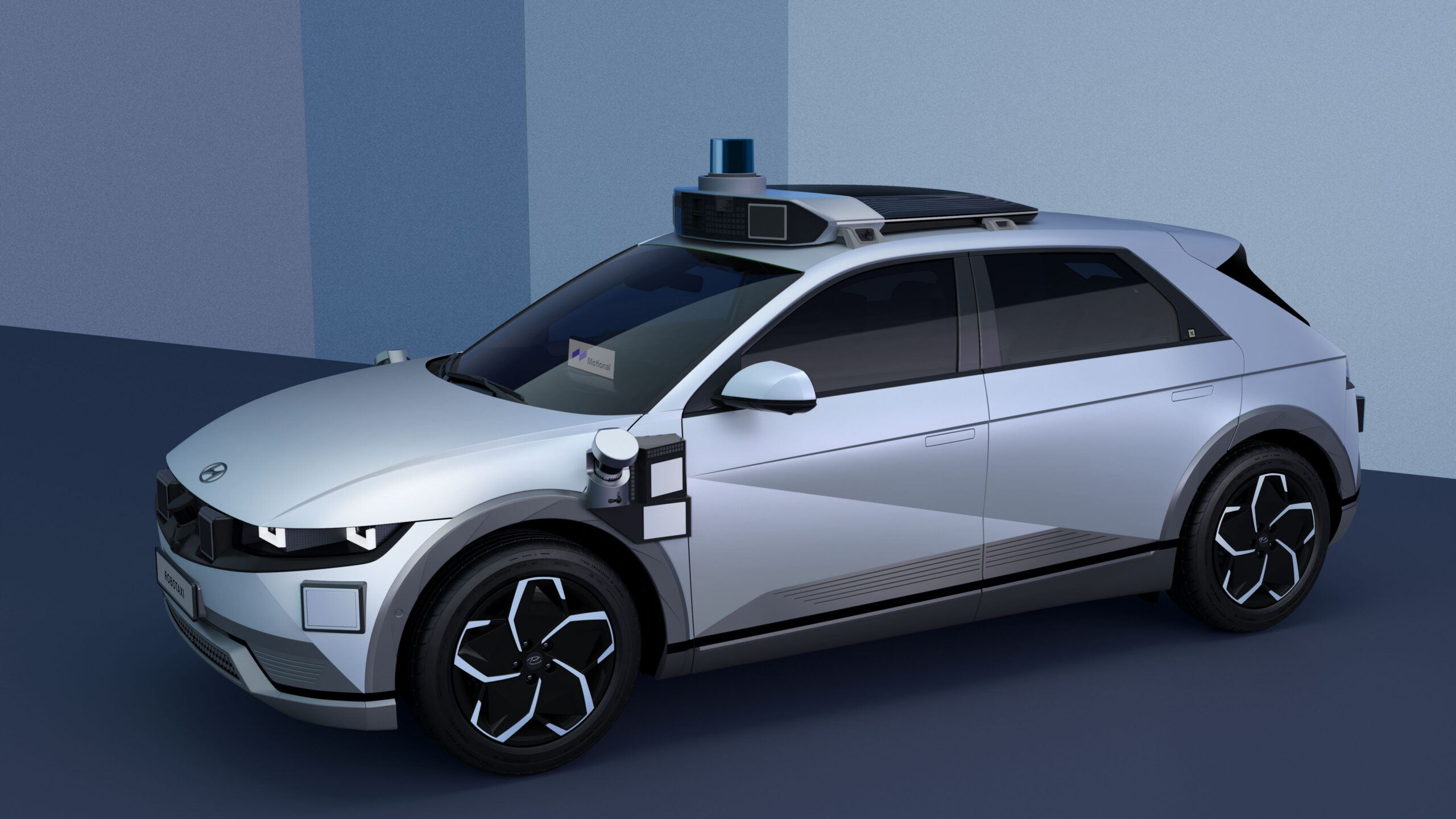
That framing explains why Hyundai is using Nvidia’s DRIVE Hyperion platform — a reference architecture built around cameras, radar, and ultrasonic sensors — as hardware scaffolding rather than as a finished product. Nvidia’s compute and training tools support Hyundai’s own software stack, the end-to-end autonomous driving system that sits at the heart of the roadmap.
The architecture matters here. DRIVE Hyperion gives Hyundai a proven, scalable compute and sensor foundation, while the automaker’s own software represents its intellectual property — the perception, planning, and decision-making layers that ultimately determine how a Hyundai, Kia, or Genesis vehicle behaves on the road. By co-designing rather than licensing a turnkey solution, Hyundai retains the ability to tune the system to its own vehicles, update it over the air on its own cadence, and — critically — collect and control the data it generates.
It’s a middle path between two extremes: Tesla’s fully vertical approach and the plug-and-play systems adopted by automakers content to let suppliers own the intelligence layer. Hyundai clearly wants to be neither.
The Timeline: Level 2+ in 2028, End-to-End System in 2029
Hyundai’s rollout unfolds in phases, each with meaningful implications for what drivers can actually do behind the wheel.
First half of 2028: Production vehicles equipped with Level 2+ systems begin rolling off the line. At this stage, expect advanced highway assistance — automated lane changes, adaptive cruise with improved traffic handling, and hands-on-wheel operation with more sophisticated driver monitoring.
Second half of 2028: A more capable Level 2+ variant enters production. The expanded scope likely includes broader highway coverage, more complex merge and exit handling, and greater confidence in mixed traffic — while still requiring driver supervision.
Second half of 2029: Hyundai’s end-to-end autonomous driving system enters production, debuting at Level 2+ capability. This is the milestone Hyundai has been building toward: a software-defined architecture where a single neural network handles perception and planning end to end, rather than relying on hand-coded rules stitched across modules.
The delay against Hyundai’s earlier public targets is real, and the company isn’t hiding it. But its argument is essentially that arriving late with a system it owns is better than arriving early with a system it rents.
Sensors Today, LiDAR Tomorrow
The first wave of Hyundai’s system leans on a familiar sensor suite: cameras, radar, and ultrasonics, all running on Nvidia’s DRIVE Hyperion platform. That combination is well-suited to Level 2+ functionality — robust enough for highway driving, cost-effective enough to deploy across millions of vehicles.
But the roadmap doesn’t stop there. Hyundai has signaled that future iterations could add advanced LiDAR to unlock Level 3 autonomous driving, including hands-off operation in specific conditions. That’s the threshold where liability and capability both shift: Level 3 means the driver can disengage from the task entirely within defined operational domains, and LiDAR’s precise depth sensing becomes far more valuable for validating those scenarios.
The staged approach is pragmatic. Rather than saddling every vehicle with expensive LiDAR from day one, Hyundai can scale Level 2+ broadly while reserving higher-cost hardware for trims and models where Level 3 capability justifies the premium.
The Data Playbook: Millions of Vehicles a Year
Here’s where Hyundai’s strategy gets genuinely ambitious. The company is following Tesla’s playbook by harvesting fleet data to train its autonomous systems — but it’s doing so across three brands: Hyundai, Kia, and Genesis.
That scale is the crux of the argument. Hyundai has said publicly that it expects to accumulate a substantial real-world driving dataset across its combined fleet, which sells well over 7 million vehicles annually. Every one of those vehicles, equipped with the right sensors and connectivity, becomes a potential data collection node — feeding real-world edge cases back into the training pipeline.
Tesla’s advantage has always been its fleet: millions of cars logging billions of miles, creating a flywheel where more data yields better software, which sells more cars, which generates more data. Hyundai is now building the same flywheel, just with three brands feeding one stack. Whether that’s enough to close a gap Tesla has been widening for years is the central question — but the volume math is not trivial. More than 7 million vehicles annually is a serious number, and it compounds.
Hyundai’s targets are also telling. The company isn’t claiming it will lead by 2028 or 2030. It’s playing a long game, betting that data accumulation is a marathon rather than a sprint — and that the winner is determined by who’s still collecting when the others plateau.
The Competitive Landscape
Against Tesla, Hyundai remains the challenger. Tesla’s vertically integrated stack, its massive real-world dataset, and its willingness to ship unfinished features to customers give it a speed advantage Hyundai can’t match on the software side. But Tesla’s approach has also produced regulatory friction and public scrutiny that a more conservative, staged rollout can avoid.
Against GM, Hyundai is arguably ahead on messaging clarity. GM’s Super Cruise is a genuinely capable hands-off highway system, but the company’s broader autonomous ambitions — particularly through Cruise — have stumbled badly. Hyundai’s roadmap, by contrast, is incremental and credible.
The Chinese automakers may be the wildcard. Companies like BYD, XPeng, and Huawei-backed brands are deploying advanced driver assistance at aggressive price points and rapid cadences, particularly in their home market. They represent a competitive pressure that neither Tesla nor GM faces in quite the same way, and they could reset consumer expectations for what affordable autonomy looks like.
Hyundai’s position — co-designed hardware, owned software, multi-brand data — is a reasonable hedge against all three threats. It won’t win a speed race, but it’s built to survive one.
What It Means for the Industry and Consumers
Hyundai’s self-driving suite represents a bet on ownership over expedience. The company is willing to arrive late if it means the system under the sheet metal is genuinely its own — trainable, updatable, and defensible against the suppliers and partners that increasingly sit between automakers and their customers.
For consumers, the practical timeline is straightforward: meaningful highway assistance in 2028, a more capable system in late 2029, and the possibility of hands-off Level 3 driving sometime after that, contingent on LiDAR costs, regulation, and the maturity of the end-to-end software stack.
Picture the 2028 experience: you’re on a highway, hands on the wheel, and the car handles the merge, adjusts speed for traffic ahead, and proposes a lane change when the left lane opens up. You confirm with a tap. It’s not autonomy — you’re still driving — but it’s the kind of assistance that turns a three-hour interstate slog into something closer to a commute. That’s the near-term promise, and it’s the one most buyers will actually encounter first.
The wait will be worth it only if Hyundai’s data flywheel spins fast enough. More than 7 million vehicles a year across three brands is a formidable engine — but engines don’t win races on their own. Execution, regulatory clearance, and the willingness to keep investing through the years when the system is merely competitive rather than class-leading will determine whether Hyundai’s long game pays off.
For now, the company has done something its rivals often haven’t: it has committed to a date, a partner, and a philosophy. In autonomous driving, that’s more clarity than most.